More Than Just Filler: The Surprising Ways Inactive Ingredients in Generic Drugs Can Affect How You Feel

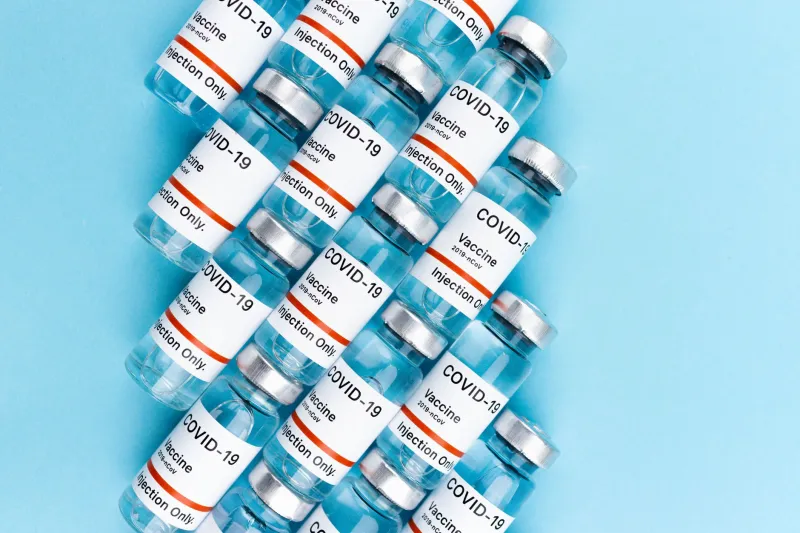
Photo by Photo by Nastya Dulhiier on Unsplash on Unsplash
Open a bottle of generic metformin and you are holding a tablet that is, by weight, mostly not metformin. The active pharmaceutical ingredient—the molecule that actually lowers blood sugar—may account for only a fraction of the tablet's total mass. The rest is a carefully engineered mixture of substances that hold the tablet together, control how quickly it dissolves, prevent it from sticking to machinery, give it a particular color or coating, and extend its shelf life.
These substances are called excipients, or more commonly, inactive ingredients. And despite that second label, the science increasingly suggests that calling them inactive is, in many cases, an oversimplification that can have real consequences for real patients.
What the FDA Does—and Does Not—Regulate About Excipients
The FDA requires that inactive ingredients in approved drug products be safe and suitable for their intended use. Excipients that appear on the FDA's Inactive Ingredient Database have been reviewed and approved for use in specific drug types, routes of administration, and dosage forms. That review process is meaningful, and it provides a substantial safety baseline.
What the FDA does not require is that generic drugs use the same excipients as the brand-name reference product, or that different generic manufacturers use the same excipients as one another. Manufacturers have considerable latitude in selecting excipients, provided they can demonstrate that their formulation meets bioequivalence and stability standards. This latitude exists for legitimate manufacturing reasons—different production facilities, equipment, and supply chains may necessitate different formulation approaches.
The result, however, is that two tablets containing identical amounts of the same active ingredient may deliver that ingredient through a substantially different chemical vehicle. And that vehicle is not always passive.
How Excipients Can Influence Drug Behavior
The most direct way an inactive ingredient can affect a patient is through its influence on drug absorption. Excipients are not simply inert scaffolding; they interact with the active ingredient and with the patient's gastrointestinal environment in ways that can meaningfully alter how much drug reaches the bloodstream and how quickly.
Disintegrants—substances that help a tablet break apart in the stomach—affect dissolution rate. If a generic manufacturer uses a different disintegrant than the brand-name product, the tablet may dissolve faster or slower, shifting the drug's absorption profile. For most medications, this difference is absorbed within the bioequivalence window. But for drugs with narrow therapeutic indices, or in patients whose gastrointestinal function is already compromised by age or illness, even modest shifts can matter.
Fillers and binders present similar considerations. Lactose, a commonly used filler, is well-tolerated by most patients but can cause gastrointestinal distress in the estimated 36 percent of Americans who have some degree of lactose intolerance. When a patient switches to a generic that uses lactose as a filler and begins experiencing bloating, cramping, or diarrhea, the connection to the medication change may not be immediately obvious—to the patient or to their physician.
Dyes and colorants are another category worth examining. FD&C Yellow No. 5 (tartrazine), used in some tablet coatings, has been associated with hypersensitivity reactions in a small subset of patients, particularly those with aspirin sensitivity. Patients who tolerate one generic formulation without incident may react to another simply because the second uses a colorant the first did not.
Vulnerable Populations and Heightened Risk
While excipient sensitivity can affect any patient, certain populations face elevated risk and deserve particular attention.
Older adults are disproportionately affected for several reasons. Gastrointestinal motility slows with age, altering the environment in which tablets dissolve. Reduced stomach acid production—common in elderly patients and those on proton pump inhibitors—can affect the dissolution of certain coatings. And because older adults are more likely to be managing multiple chronic conditions simultaneously, they are taking more medications, which increases the cumulative exposure to excipients and the probability of encountering a problematic one.
Patients with food allergies or intolerances face a specific challenge. Excipients are not always derived from inert synthetic sources. Some contain wheat starch (relevant for patients with celiac disease or non-celiac gluten sensitivity), peanut oil (relevant for patients with peanut allergies), or soy derivatives. These components must be disclosed on drug labeling, but the disclosure is not always prominent, and patients may not know to look for it.
Patients with multiple comorbidities often take medications that interact not just pharmacologically but physiologically—affecting gut motility, absorption surface area, and metabolic pathways in ways that can amplify excipient effects that would be negligible in a healthier individual.
Pediatric and neonatal patients represent a particularly sensitive group. Some excipients that are safe in adults carry documented risks in young children. Benzyl alcohol, a preservative used in some injectable formulations, has been associated with serious adverse events in neonates. Propylene glycol, used in some liquid formulations, can accumulate to toxic levels in infants and young children when administered in sufficient quantities. The FDA has issued guidance on these concerns, but the clinical landscape remains complex.
Practical Steps for Patients Concerned About Excipients
Awareness is the starting point, and fortunately, the tools for informed inquiry are more accessible than many patients realize.
Review the FDA's Inactive Ingredient Database. This publicly available resource, accessible through the FDA website, allows patients and healthcare providers to search for excipients by drug name, route of administration, or ingredient name. It is a useful starting point for identifying what is in a specific formulation.
Read the drug's package insert. Full prescribing information, which includes a list of inactive ingredients, is available through the FDA's DailyMed database for every approved drug product. The National Institutes of Health maintains DailyMed as a free public resource, and it is searchable by drug name and manufacturer.
Ask your pharmacist to identify the manufacturer and check the inactive ingredient list. Pharmacists have access to product-specific information that goes beyond what appears on the dispensing label. If you have a known sensitivity—to lactose, gluten, a specific dye, or any other substance—your pharmacist can check whether the current stock's formulation contains that ingredient and, in some cases, source an alternative.
Inform your prescribing physician of any sensitivities before a new prescription is written. A note in your medical record documenting known excipient sensitivities can prompt greater care in prescribing and dispensing decisions, particularly when a new generic is being introduced.
Keep a symptom log when starting a new medication or switching manufacturers. New or unexpected symptoms appearing within days of a refill—particularly gastrointestinal symptoms, skin reactions, or changes in how a medication seems to be working—are worth documenting and discussing with your healthcare provider.
The Broader Conversation That Needs to Happen
The excipient issue reflects a broader tension in pharmaceutical policy: the system is designed to evaluate drugs at the population level, but patients experience them as individuals. The FDA's framework for excipient safety is built on reasonable assumptions about average patients under average conditions. It was not designed to anticipate every combination of patient history, comorbidity, and concurrent medication that exists in the real world.
Researchers at institutions including MIT and Harvard have been calling for greater attention to excipient variability in generic formulations, and some advocacy groups have petitioned the FDA to require more transparent excipient disclosure at the point of dispensing. Progress has been incremental, but the conversation is gaining momentum.
In the meantime, American patients are best served by knowing what questions to ask. A pill is not simply its active ingredient. What surrounds that ingredient—what carries it, binds it, coats it, colors it, and delivers it—is a legitimate part of the medication you are taking. Treating it as such is not overcaution. It is informed healthcare.