Crossing Borders for Cheaper Medication: What Americans Need to Know About Foreign Generic Drugs and FDA Standards
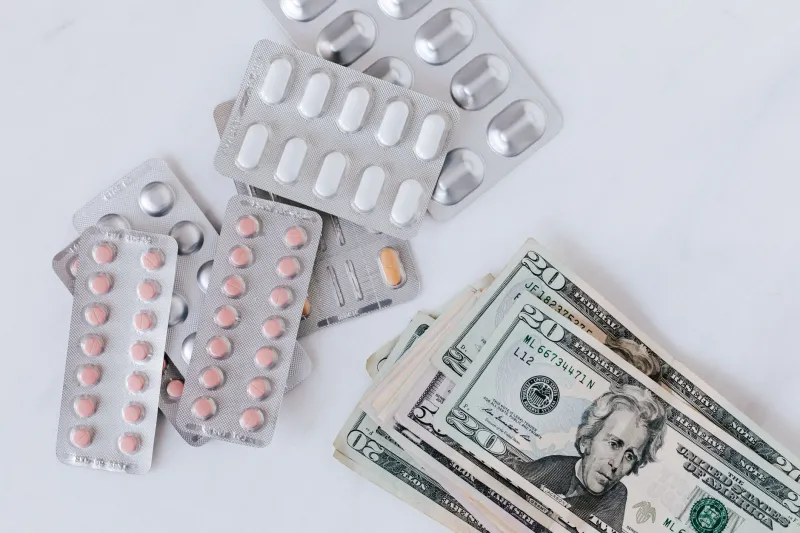
The math is not complicated. A thirty-day supply of a common generic medication that costs $180 at an American pharmacy may be available for $30 at a Canadian online pharmacy or $15 at a Mexican farmacia. For the estimated 29 percent of American adults who report difficulty affording their prescription medications, those numbers are difficult to ignore. But before filling a virtual or physical shopping cart with foreign generics, there are regulatory, legal, and safety dimensions that deserve careful consideration.
How the FDA Approves Generic Drugs — and Why That Matters Here
To understand what distinguishes an FDA-approved generic from a foreign equivalent, it helps to first understand what the FDA's approval process actually requires. Under the Drug Price Competition and Patent Term Restoration Act of 1984, commonly known as the Hatch-Waxman Act, a generic drug manufacturer must demonstrate bioequivalence to the reference brand-name drug. This means the generic must deliver the same active ingredient at the same dosage, in the same dosage form, with an absorption rate that falls within an accepted statistical range of the original.
Beyond bioequivalence, FDA approval requires inspections of manufacturing facilities, review of inactive ingredient safety, and ongoing post-market surveillance. The FDA also maintains an Approved Drug Products database — the Orange Book — that allows anyone to verify whether a specific generic has met these requirements.
This approval infrastructure is robust, though not without its own imperfections. The critical point for cross-border comparisons is that not all countries require equivalent levels of documentation, inspection, or post-market monitoring before a generic reaches pharmacy shelves.
Canada: A Closer Look at the Most Popular Cross-Border Option
Canada is the most common destination for Americans seeking lower-cost medications, and for several reasons, it occupies a more favorable position than most other international sources. Health Canada, the federal regulatory agency responsible for drug approvals, applies standards that are broadly comparable to those of the FDA in many respects. Canadian generics must demonstrate bioequivalence, and manufacturing facilities are subject to inspection.
However, "broadly comparable" is not the same as "identical." Health Canada's bioequivalence thresholds and manufacturing inspection protocols differ in some technical particulars from FDA requirements. A drug approved in Canada has not been reviewed by the FDA, and its manufacturing facility may not have undergone an FDA inspection — even if it has passed Canadian regulatory review.
It is also worth noting that many medications sold through Canadian online pharmacies are not actually manufactured in Canada. Products may be sourced from India, the United Kingdom, or other countries, with Canadian pharmacies serving as intermediaries. The country of origin for the actual product may differ from the country of the pharmacy.
Mexico and Other International Sources
Mexico presents a more variable picture. Some Mexican generics are manufactured by large, reputable pharmaceutical companies whose facilities are FDA-inspected because they also supply the US market. Others are produced by smaller domestic manufacturers operating under Mexico's COFEPRIS regulatory framework, which has faced criticism for inconsistent enforcement.
For Americans who cross the border physically to purchase medications in Mexican border cities, the quality of what they obtain can vary considerably depending on where they shop and what they purchase. Established pharmacy chains in Mexico generally carry more reliable products than informal or street-adjacent vendors, but neither category offers the same assurance as an FDA-approved product.
Beyond Canada and Mexico, the landscape grows considerably more uncertain. Generics sourced from online pharmacies based in countries without stringent drug regulatory frameworks — including some that appear to be Canadian or European but operate out of entirely different jurisdictions — have been found by FDA and international regulators to contain incorrect dosages, undisclosed active ingredients, or outright counterfeit formulations.
The Legal Reality for American Consumers
Federal law is unambiguous on this point: importing prescription drugs from foreign countries for personal use is technically illegal under the Federal Food, Drug, and Cosmetic Act. The FDA does not approve drugs for importation by individual consumers, and neither does the Drug Enforcement Administration for controlled substances.
In practice, however, FDA enforcement of personal importation has historically been limited. The agency has maintained a long-standing policy of exercising enforcement discretion for personal-use quantities — generally defined as a supply of up to ninety days — when the drug is for a serious condition, no comparable FDA-approved product is available domestically, and the importation does not present an unreasonable risk. This policy is discretionary, not a legal right, and it can change.
Several states, including Florida and Texas, have pursued state-level drug importation programs focused primarily on purchasing from Canada at the wholesale level. These programs require federal authorization and have faced a complicated path through the regulatory approval process. As of the time of publication, no state program has yet achieved full operational status for consumer-level importation.
Identifying Legitimate International Online Pharmacies
For consumers who choose to explore international purchasing despite the legal and regulatory complexities, distinguishing legitimate pharmacies from fraudulent operations is an essential skill.
The Canadian International Pharmacy Association (CIPA) maintains a verified list of member pharmacies that agree to adhere to Canadian pharmacy laws and dispensing standards. CIPA-verified pharmacies require a valid prescription from a licensed physician and dispense only Health Canada-approved medications. This is not a guarantee of FDA equivalence, but it represents a meaningful baseline of legitimacy.
In the United States, the National Association of Boards of Pharmacy (NABP) operates a program that identifies online pharmacies meeting US state licensure and prescription requirements. Its counterpart designation — "Not Recommended" — flags sites that operate outside legal and safety standards. Consulting the NABP database before purchasing from any online pharmacy, domestic or foreign, is a straightforward precaution.
Red flags that suggest a fraudulent or unsafe online pharmacy include the absence of a prescription requirement, prices that seem implausibly low even by international standards, no verifiable physical address, and contact information limited to web forms with no telephone number.
Weighing the Real Risks Against the Financial Pressures
The risks associated with foreign generics exist on a spectrum. At one end, a consumer purchasing from a CIPA-verified Canadian pharmacy a generic antihypertensive manufactured at an FDA-inspected facility in India faces a risk profile that is meaningfully different from someone ordering an unbranded generic from an unverified overseas website.
At the other end, counterfeit and substandard medications obtained through illegitimate channels have caused documented patient harm, including treatment failures, adverse reactions, and in extreme cases, serious illness from undisclosed contaminants.
For American consumers navigating genuinely unaffordable prescription costs, the decision to look abroad is understandable. But it should be made with clear eyes about what regulatory protections are and are not in place. The FDA's approval framework exists precisely to provide the assurance that a medication contains what it claims, in the amount stated, manufactured under conditions that minimize contamination risk. When that framework is bypassed — whether through a reputable foreign pharmacy or an unverified one — some portion of that assurance is forfeited.
Before pursuing international options, it is worth exhausting domestic alternatives: manufacturer patient assistance programs, federally qualified health center pharmacies, state pharmaceutical assistance programs, and the 340B drug pricing program for eligible patients. These pathways are legal, carry no importation risk, and in many cases can bring costs down to levels competitive with international sources.