One Drug, Many Names: A Consumer's Guide to Understanding Medication Naming in the U.S.
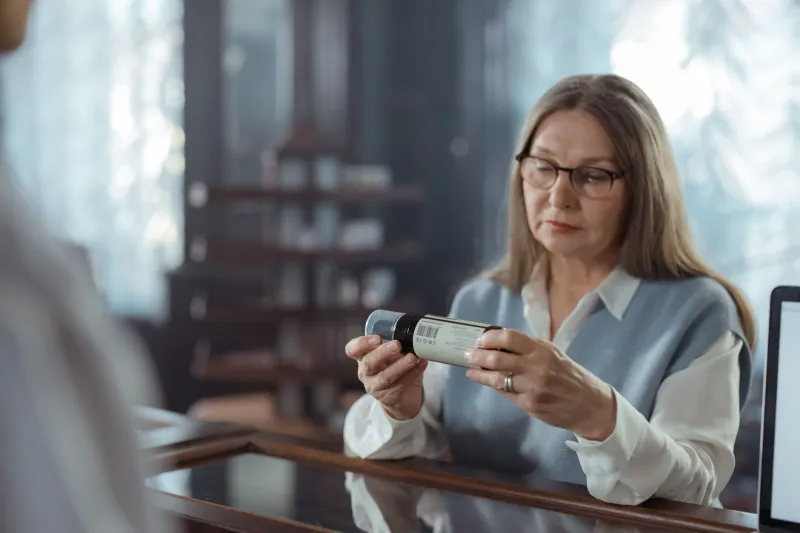
You hand the pharmacist a prescription for a medication your doctor has recommended for years. The bottle you receive back looks different. The name printed on the label is unfamiliar. The color of the pill has changed. A reasonable question follows: is this actually the same medication?
In most cases, the answer is yes — but the path to that reassurance is rarely straightforward. The U.S. pharmaceutical naming system is layered, historically complex, and designed primarily for regulators and clinicians rather than the patients who depend on it most. Fortunately, once you understand the basic architecture of how drugs are named, the confusion largely resolves itself.
The Three-Name System Every Patient Should Know
Every medication in the United States operates under at least two names, and often many more. Understanding the distinction between these naming layers is the single most useful thing a consumer can do to navigate pharmacy confusion.
The chemical name is the precise scientific designation for a drug's molecular structure. It is long, technical, and almost never appears on a retail pharmacy label. Ibuprofen's chemical name, for instance, is 2-(4-isobutylphenyl)propionic acid. You will rarely encounter this in a consumer context.
The generic name, sometimes called the International Nonproprietary Name (INN), is the standardized, globally recognized identifier for an active pharmaceutical ingredient. In the United States, these names are assigned and maintained by the United States Adopted Names (USAN) Council, a body jointly operated by the American Medical Association, the U.S. Pharmacopeial Convention, and other professional organizations. Ibuprofen is a generic name. So are metformin, lisinopril, and atorvastatin. Generic names are not owned by any company and cannot be trademarked.
The brand name, by contrast, is a proprietary label created by a pharmaceutical manufacturer for marketing purposes. Advil and Motrin are brand names for ibuprofen. Glucophage is a brand name for metformin. Lipitor is a brand name for atorvastatin. When a drug's patent expires, other manufacturers are legally permitted to produce and sell the same active ingredient — but they must market it under either the generic name or a new proprietary brand name of their own.
This is where the proliferation begins.
Why Generic Drugs Accumulate So Many Names
When a blockbuster medication loses patent protection, the market opens to competition. Multiple manufacturers may begin producing the same active ingredient simultaneously. Each of those manufacturers has several options: they can sell the drug simply under its generic name, or they can invest in branding it under a proprietary label of their choosing.
Consider a widely used blood pressure medication like amlodipine. Once Pfizer's patent on Norvasc expired, dozens of generic manufacturers entered the market. Some sell their version simply as "amlodipine besylate." Others have created store-brand labels — names like Amlodipine by Greenstone, Amlodipine by Mylan, or retailer house brands like those sold under CVS Health or Walgreens' generic lines. The active ingredient is identical across all of these products, but a patient who switches pharmacies or insurance plans may encounter a different label with each refill.
Retail pharmacy chains compound this further. Many large chains source generic medications from a rotating list of approved wholesalers and may switch suppliers based on cost, availability, or contractual arrangements. This means the manufacturer behind your medication can change from one month to the next, even if you fill at the same pharmacy.
The Role of FDA Approval in Keeping Names Consistent
While the names on the bottle may vary, the regulatory framework governing what's inside it does not. The U.S. Food and Drug Administration (FDA) requires that all generic medications demonstrate bioequivalence to their brand-name counterparts before receiving approval. This process, governed under the Abbreviated New Drug Application (ANDA) pathway, ensures that generics deliver the same active ingredient at the same dosage, in the same form, and with the same route of administration as the original drug.
The FDA's Orange Book — formally titled the "Approved Drug Products with Therapeutic Equivalence Evaluations" — is a publicly accessible database that lists all FDA-approved drugs and their therapeutic equivalence ratings. Consumers and healthcare providers can use this resource to confirm that a given generic product is considered therapeutically equivalent to a reference brand-name drug. An "AB" rating, which is the most common designation, indicates that the FDA considers the products interchangeable.
Practical Strategies for Tracking Your Medications
Knowing the system is helpful. Knowing how to work within it is essential. The following strategies can help patients confidently manage their medications regardless of what name appears on the label.
Lead with the generic name. When speaking with your doctor, pharmacist, or insurance company, always reference the active ingredient rather than any brand name. Asking for "atorvastatin" rather than "Lipitor" ensures that everyone involved in your care is working from the same pharmacological reference point, regardless of what manufacturer produced the pills in your bottle.
Read the "Active Ingredient" section of the label. U.S. pharmacy labels are required to list the active ingredient by its generic name. Even if the brand or store label on the bottle is unfamiliar, the active ingredient disclosure will tell you what the medication actually is. If the active ingredient matches what your doctor prescribed, the product is correct.
Use the FDA's drug databases. The FDA's Drugs@FDA database and the Orange Book are both free, publicly accessible tools. Entering a drug name will return information about approved formulations, manufacturers, and equivalence ratings. These are authoritative resources that require no medical background to use effectively.
Keep a personal medication record. Maintaining a simple written or digital list of your medications — including the generic name, dosage, and prescribing indication — gives you a reliable reference point when labels change. Many healthcare providers and patient advocacy organizations offer standardized medication record templates for exactly this purpose.
Ask your pharmacist directly. Pharmacists are among the most accessible and underutilized healthcare professionals in the United States. If a label looks unfamiliar, asking the dispensing pharmacist to confirm the active ingredient and equivalence to your previous supply takes less than a minute and provides immediate clarity.
When Name Confusion Signals a Real Concern
While most naming variations are benign, there are situations where a label change warrants closer attention. Certain drug classes — including blood thinners, thyroid medications, and some antiepileptic drugs — have narrow therapeutic windows, meaning that small variations in absorption can have clinically meaningful effects. Patients on these medications should consult their prescriber before switching between manufacturers, even if both products carry FDA approval.
Additionally, if a label change is accompanied by a change in pill appearance, strength, or formulation type (for example, from an extended-release to an immediate-release tablet), patients should verify with their pharmacist that the substitution is appropriate for their specific prescription.
The Informed Patient Advantage
The U.S. pharmaceutical naming system was not designed with consumer simplicity as its primary objective. It evolved from scientific, regulatory, and commercial conventions that serve multiple stakeholders simultaneously. For patients navigating this system, the learning curve is real but surmountable.
Arming yourself with the generic name of every medication you take, understanding that brand variation is a feature of market competition rather than a sign of inferior quality, and knowing where to look when questions arise — these habits transform a potentially confusing experience into a manageable one. In a healthcare environment where informed consumers consistently achieve better outcomes, understanding what's in your prescription bottle is a meaningful place to start.